First Nations Co. acknowledge the Traditional Custodians of these lands never ceded. We acknowledge the continued custodianship and protection of country and culture. We acknowledge the cultural knowledge that sustains country, culture and community. We honour our old people and thank them for their leadership, their guidance and their legacy. This is, was and always will be, Aboriginal land.
About the Evaluation
The QMHC First Nations SEWB program is a Queensland Government initiative aimed at enhancing mental health and wellbeing through community-led programs. It focuses on self-determination and local decision-making, particularly for Aboriginal and Torres Strait Islander Peoples. The program supports initiatives that are co-designed with local leadership to improve social and emotional wellbeing, address substance misuse, and reduce suicide rates in these communities.
The QMHC oversees and funds the First Nations Program, while local community and Aboriginal and Torres Strait Islander organisations take the lead on the ground.
The overall intended outcomes of the program are to improve mental health and social and emotional wellbeing, reduce suicide and substance-related harm, strengthen community resilience and cultural connection, and support communities to lead and sustain their own locally designed wellbeing initiatives.
The evaluation is being conducted to assess how effectively the program is achieving its intended outcomes, to understand what is working well (and what is not), and to inform future funding, program improvements and policy decisions.
Purpose of the Evaluation
The aim of this project is to undertake an independent and culturally grounded evaluation of the First Nations SEWB Program to determine its effectiveness, sustainability, and alignment with Queensland’s mental health and wellbeing reform priorities.
The evaluation will generate evidence to inform future policy decisions, strengthen government accountability, and support ongoing investment in culturally safe and community-led mental health initiatives.
Evaluation Objectives
The evaluation seeks to:
- Evaluate program impact on mental health, wellbeing, and suicide prevention outcomes
- Examine implementation processes, including Cultural Safety, governance, and leadership
- Assess program sustainability and community capacity
- Analyse alignment with statewide reform strategies and policy priorities
- Provide evidence and recommendations that strengthen culturally safe, community-led mental health initiatives
Evaluation Framework
The evaluation is guided by four key pillars that shape the lines of enquiry and evidence gathering.
Pillar 1 - Program and Policy Impact: Examining the extent to which SEWB initiatives improve wellbeing outcomes, strengthen access to culturally safe supports, and contribute to broader service system improvements.
Pillar 2 - Program Sustainability: Assessing whether initiatives can deliver long-term benefits, including workforce development, community governance, and integration into existing service systems.
Pillar 3 - Funding Design: Exploring how funding arrangements support community-led approaches and whether funding models enable culturally safe and flexible program delivery.
Pillar 4 - Community-Led Solutions: Understanding how Aboriginal and Torres Strait Islander leadership, governance, and community decision-making influence program success and long-term impact.
These pillars guide the evaluation questions and stakeholder engagement across the project.
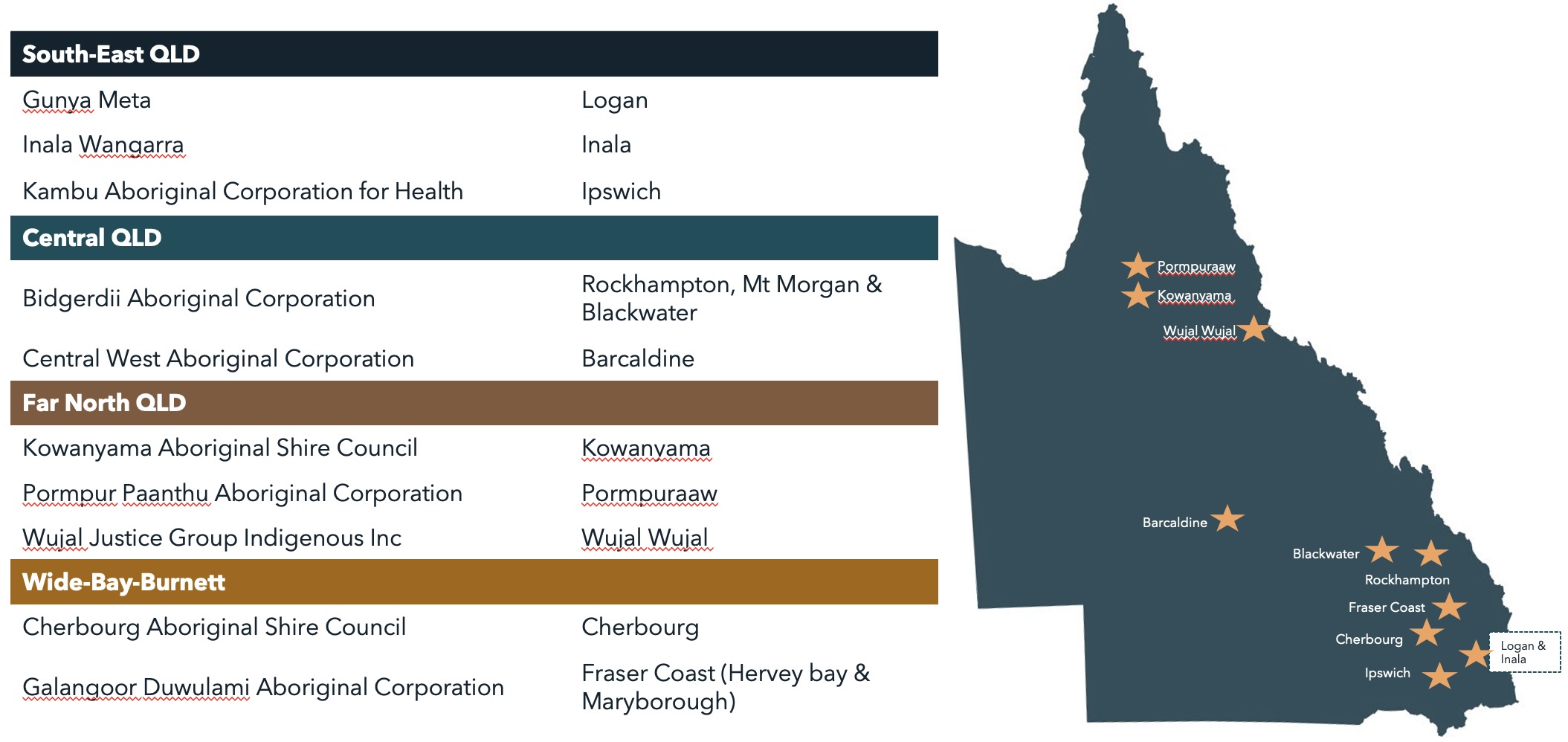
Communities and Services Participating in the Evaluation